


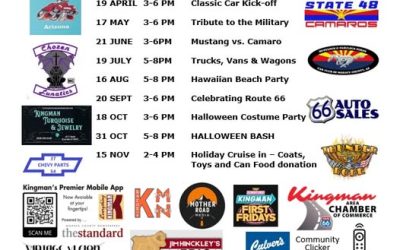
Coming Attractions
Thank you, Joyce Wiley of the Kingman Office of Tourism for this information. The first month of summer is shping up...


We are in the midst of changing times. For more than fifty years computerized systems have been steering the future of automobiles and the automobile industry. This digital revolution has not only redefined the driving experience but also reshaped the entire automotive landscape, from manufacturing to maintenance, and even the concept of vehicle ownership.
This journey began in the 1970s with the introduction of Electronic Control Units or ECUs. The was the beginning of computerized control in vehicles. These early systems took on basic tasks such as managing the engine’s fuel injection and ignition timing, which paved the way for more sophisticated technologies. By the 1980s, advancements in ECUs led to the development of features like anti-lock braking systems and traction control. This significantly enhanced vehicle safety, economy, and performance.
The impact of computerization on the auto industry has been profound. Modern vehicles are equipped with an array of sensors and computers unimaginable a decade ago. They manage everything from engine performance to in-cabin entertainment.
This evolving technologies improve fuel efficiency, emissions control, and the overall reliability of vehicles. Moreover, the integration of telematics has enabled real-time vehicle tracking, remote diagnostics, and over-the-air updates, further transforming automobile ownership.
For consumers, the benefits of computerized systems are tangible. Enhanced safety features, such as automatic emergency braking and lane-keeping assist, have significantly reduced the risk of accidents. Improved fuel efficiency translates to cost savings. And features like GPS navigation and smartphone integration offer convenience, and enhance the drivinig experience. The ability to receive software updates remotely means that vehicles can continue to be improved long after they’ve left the showroom floor.
Looking to the future, the evolution of computerized systems is steering us towards the era of autonomous vehicles. Self-driving cars, equipped with advanced sensors and AI algorithms, promise to transform our approach to transportation. They hold the potential to reduce traffic congestion, further lower emissions, and provide mobility solutions for those currently unable to drive.
But the the road to fully autonomous driving is lined with challenges. Regulatory hurdles, ethical considerations, and the need for robust cybersecurity measures are just a few of the obstacles that need to be navigated and resolved. Moreover, the automotive workforce will need to adapt to these changes, acquiring new skills to work alongside increasingly sophisticated technology.
The integration of computerized systems in automobiles has set the industry on a path of continuous innovation. As we cruise into the future, these technological advancements promise to make driving safer, more efficient, and more enjoyable. The automobile is no longer mere transportation. It is fast becoming a smart, connected hub on wheels, driving us towards a brighter, more connected world.—
The evolution of computerized systems in automobiles is a testament to human ingenuity and our relentless pursuit of progress. As we struggle to embrace these changes, we must also remain mindful of the responsibilities that come with them, ensuring that technology serves to enhance, not hinder, our journey forward.
Written by Jim Hinckley of Jim Hinckley’s America
Thank you, Joyce Wiley of the Kingman Office of Tourism for this information. The first month of summer is shping up...
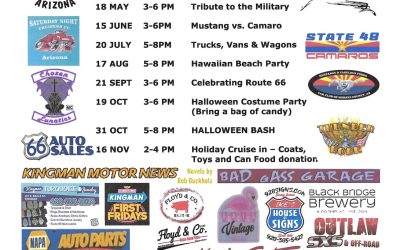
Courtesy Katie Barthlow, Kingman Office of Tourism, here is the two week event outlook for Kingman, Arizona, the Heart...
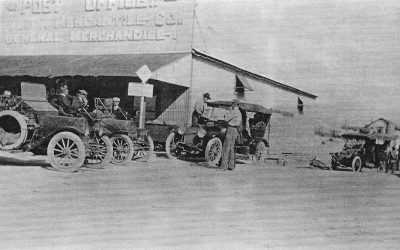
Times change and for more than 100 years Yucca, Arizona west of Kingman has adapted. It has endured, survived, and...
0 Comments